
Kaloud Hookah Smoke Emissions Study
This page reports measurements of selected smoke constituents under specific laboratory conditions. Those measurements alone do not establish that a product is safe, reduces disease risk, or makes smoking less harmful. Hookah smoking carries serious health risks.
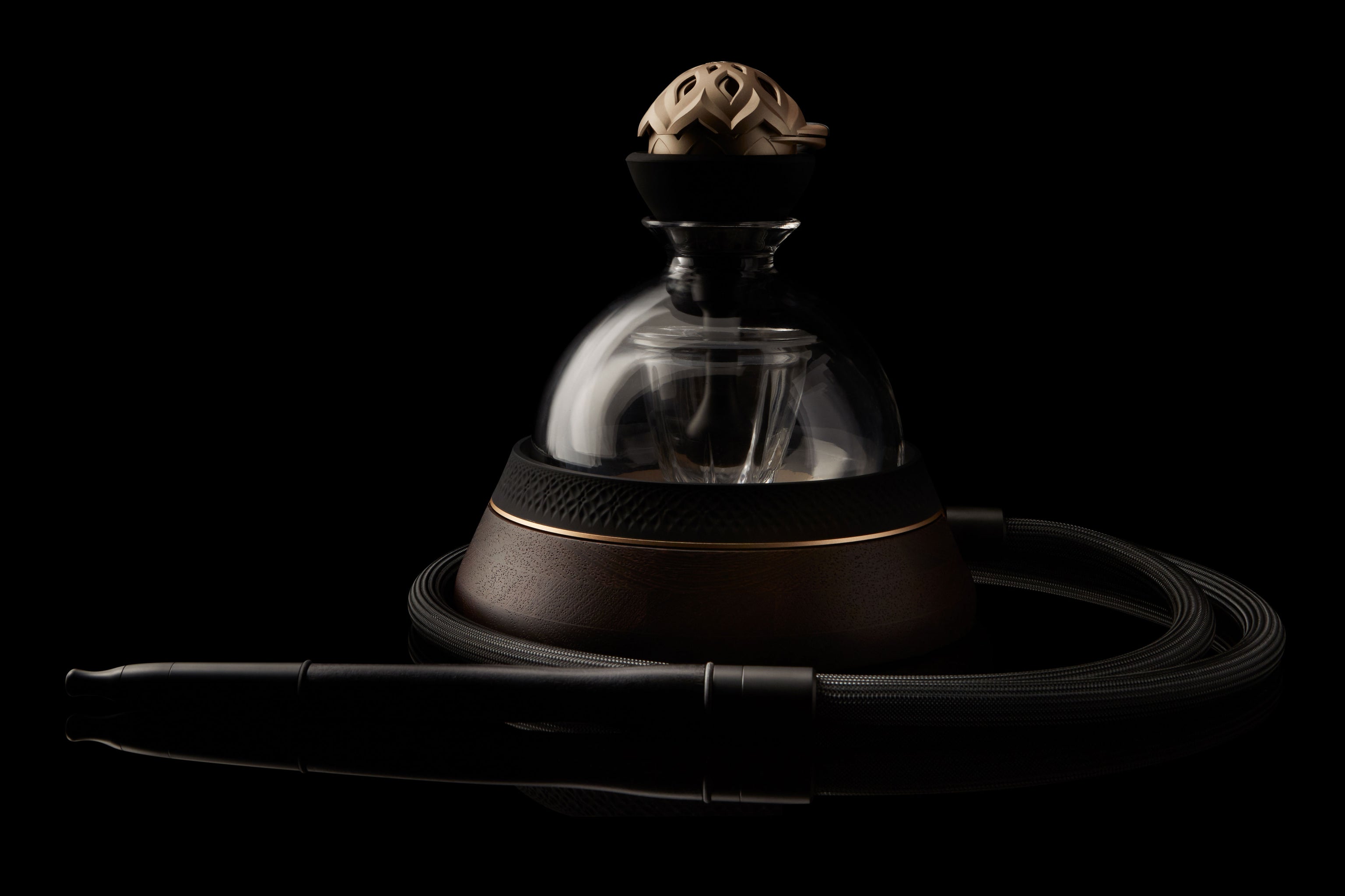
Kaloud commissioned laboratory testing to compare selected smoke constituents from the configurations described below. The results concern those test conditions and do not establish health benefits, reduced physiological harm, or a safety advantage over cigarettes or other hookahs.
The historical measurements are retained for transparency. The original laboratory reports, methods, units, limits of quantification, and calculations require review before further conclusions are drawn. Results should not be generalized to other products or ways of using them.
We welcome independent review by accredited laboratories and research institutions. Please contact us for details.
The Three Test Conditions:
- Configuration 1 — Baseline: Standard hookah without an Ayara filter or Lotus Heat Management Device; two coconut charcoal cubes.
- Configuration 2: Standard hookah with an Ayara Activated Carbon Hookah Filter, Lotus Heat Management Device, and Samsaris Vitria II bowl; three coconut charcoal cubes.
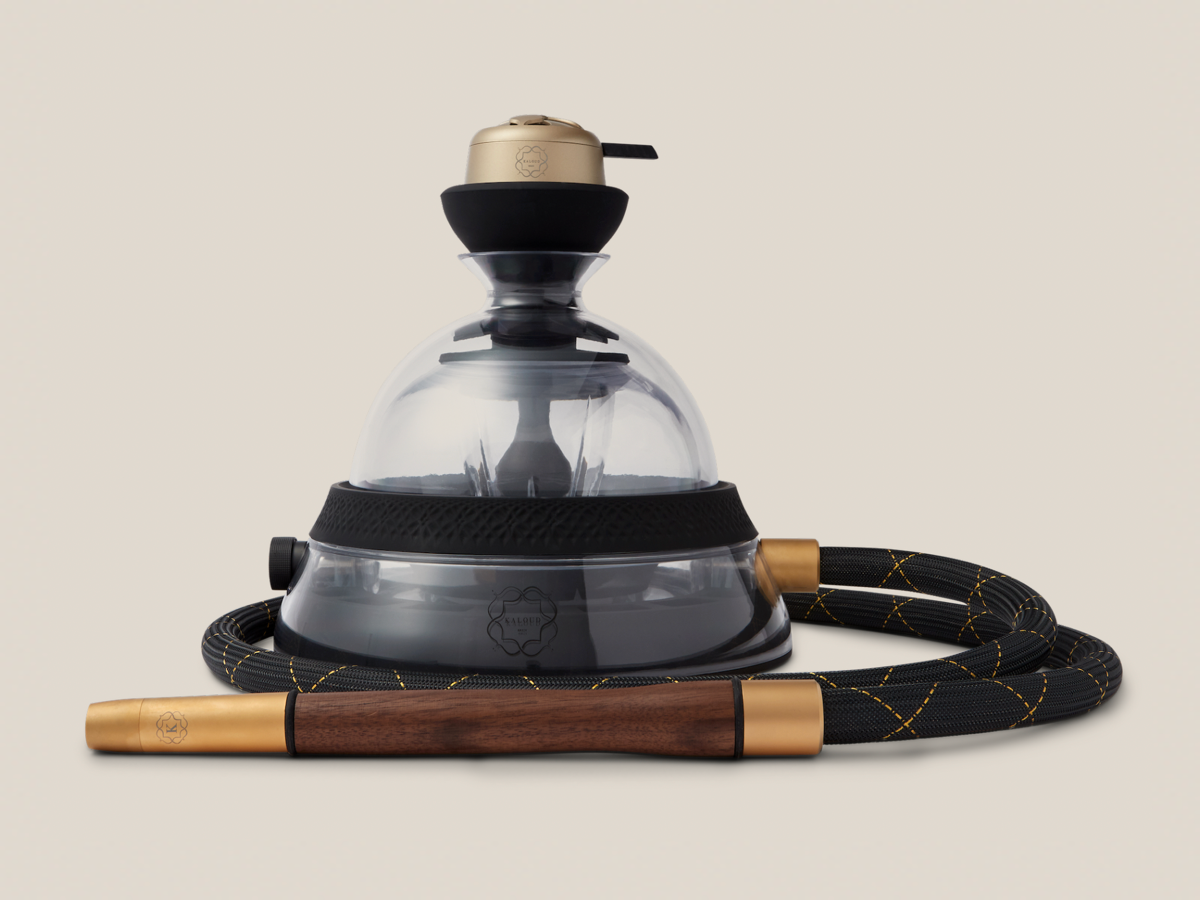
- Configuration 3: Krysalis Eltheria with an Ayara Activated Carbon Hookah Filter, Lotus Heat Management Device, and Samsaris Vitria II bowl; three coconut charcoal cubes.
Results: Krysalis Eltheria
The historical results below compare selected smoke constituents under the stated laboratory conditions. They do not establish a health benefit or a reduction in the risks of smoking.
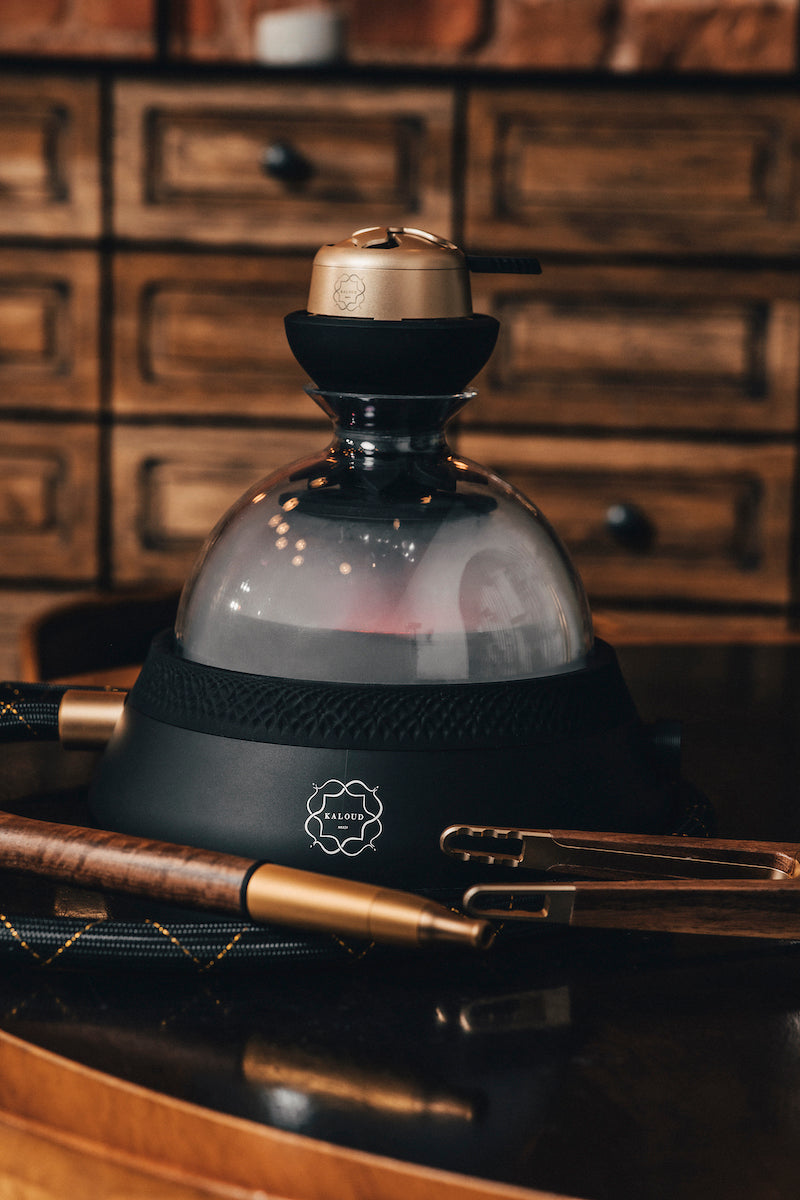
Percentage-summary graphics are withheld pending verification of the original reports and calculations. The reported constituent measurements remain below.
Product Spotlight


Results: Lotus and Ayara
The historical results below compare selected smoke constituents under the stated laboratory conditions. They do not establish a health benefit or a reduction in the risks of smoking.
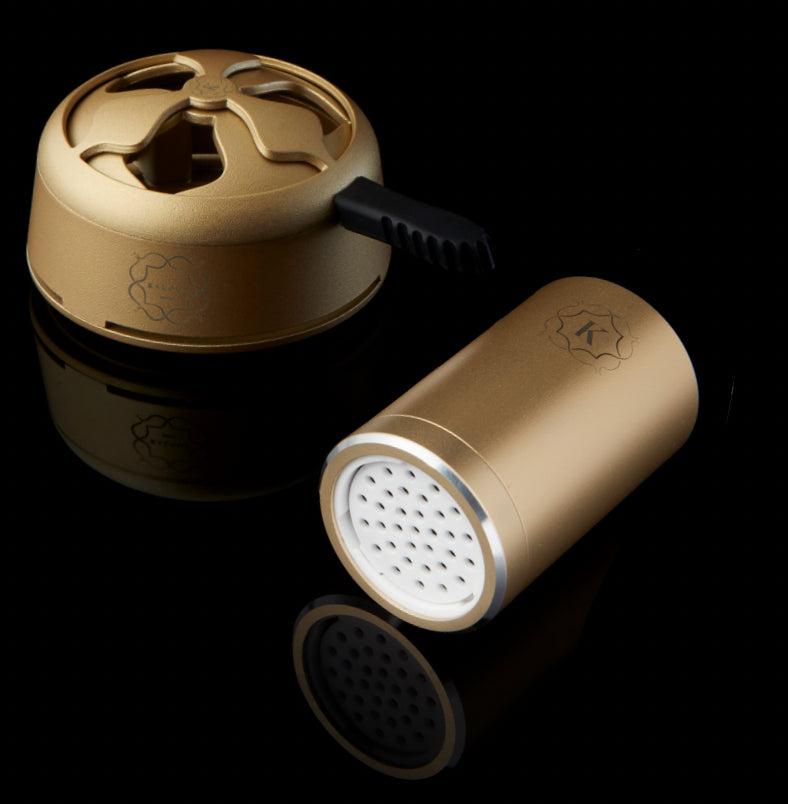
Percentage-summary graphics are withheld pending verification of the original reports and calculations. The reported constituent measurements remain below.

Carbonyl Compounds
The table below reproduces the previously reported measurements of selected carbonyl compounds. It does not measure health outcomes.
Table 1: Previously reported carbonyl compounds measurements. Three configurations are shown. Values and units reproduce the historical summary and await verification against the original laboratory reports.
| Carbonyl Compounds | Standard Hookah (baseline) | Standard Hookah & Kaloud Ayara Activated Carbon Hookah Filter & Lotus | Krysalis Eltheria & Kaloud Ayara Activated Carbon Hookah Filter & Lotus |
|
Formaldehyde
µg /175 puffs
| 778.8 | 238.0 | 40.2 |
|
Acetaldehyde
µg /175 puffs
| 866.4 | 216.8 | 73.4 |
|
Acetone
µg /175 puffs
| 211.4 | 47.0 | <LOQ |
|
Acroleine
µg /175 puffs
| 296.4 | 38.8 | <LOQ |
|
Propionaldehyde
µg /175 puffs
| 135.6 | 6.4 | <LOQ |
|
Crotonaldehyde
µg /175 puffs
| 16.2 | 3.6 | <LOQ |
|
2-Butanone
µg /175 puffs
| 5.2 | <LOQ | <LOQ |
|
Butyraldehyde
µg /175 puffs
| <LOQ | <LOQ | <LOQ |
<LOQ means below the limit of quantification, not zero or absent. Percentage reductions and averages are withheld pending review. These measurements do not establish safety or reduced health risk.
Interpreting the carbonyl results
The original page presented an average percentage decrease across selected carbonyl compounds. That summary and its graphics are withheld pending verification of the calculation and the treatment of results below the limit of quantification. An average across selected constituents is not an overall measure of smoke toxicity.
Polycyclic Aromatic Hydrocarbons (PAHs)
The table below reproduces the previously reported measurements of selected PAHs. It does not establish a reduction in cancer risk.
Table 3: Previously reported PAHs measurements. Three configurations are shown. Values and units reproduce the historical summary and await verification against the original laboratory reports.
| Polycyclic Aromatic Hydrocarbons (PAH) | Standard Hookah (baseline) | Standard Hookah & Kaloud Ayara Activated Carbon Hookah Filter & Lotus | Kysalis Eltheria & Kaloud Ayara Activated Carbon Hookah Filter & Lotus |
|
Naphtalene
µg /175 puffs
| 1.194 | 0.183 | 0.005 |
|
Acenaphthylene
µg /175 puffs
| 0.050 | 0.004 | 0.000 |
|
Acenaphthene
µg /175 puffs
| 0.199 | 0.030 | 0.007 |
|
Fluorene
µg /175 puffs
| 0.228 | 0.015 | 0.003 |
|
Phenanthrene
µg /175 puffs
| 1.264 | 0.232 | 0.046 |
|
Anthracene
µg /175 puffs
| 0.137 | 0.015 | 0.006 |
|
Fluoranthene
µg /175 puffs
| 0.477 | 0.102 | 0.031 |
|
Pyrene
µg /175 puffs
| 0.625 | 0.146 | 0.077 |
|
Benz[a]anthracene
µg /175 puffs
| 0.062 | 0.008 | 0.001 |
|
Chrysene
µg /175 puffs
| 0.079 | 0.009 | 0.001 |
|
Benzo[b]fluoranthene
µg /175 puffs
| 0.067 | <LOQ | 0.001 |
|
Benz[k]fluoranthen
µg /175 puffs
| 0.002 | <LOQ | <LOQ |
|
Benzo[a]pyrene
µg /175 puffs
| 0.018 | <LOQ | <LOQ |
|
Benzo[g,h,i]perylene
µg /175 puffs
| 0.040 | <LOQ | <LOQ |
|
Dibenzo[a,h]anthracene
µg /175 puffs
| <LOQ | <LOQ | <LOQ |
|
Indeno[1,2,3-cd]pyrene
µg /175 puffs
| 0.008 | <LOQ | <LOQ |
<LOQ means below the limit of quantification, not zero or absent. Percentage reductions and averages are withheld pending review. These measurements do not establish safety or reduced health risk.
Interpreting the PAH results
The original page presented an average percentage decrease across selected PAHs. That summary and its graphics are withheld pending verification of the calculation and the treatment of results below the limit of quantification. These measurements do not establish reduced disease risk.
The Better Option.
Better-informed choices begin with clear evidence. These laboratory measurements describe selected smoke constituents only; they do not show that Kaloud products make smoking safer or less harmful.
Volatile Organic Compounds (VOCs)
The table below reproduces the previously reported measurements of selected VOCs. A result below the limit of quantification does not establish that a compound is absent.
Table 5: Previously reported VOCs measurements. Three configurations are shown. Values and units reproduce the historical summary and await verification against the original laboratory reports.
| Volatile Organic Compounds (VOC) | Standard Hookah (baseline) | Standard Hookah & Kaloud Ayara Activated Carbon Hookah Filter & Lotus | Kysalis Eltheria & Kaloud Ayara Activated Carbon Hookah Filter & Lotus |
|
1,3-Butadiene
µg /175 puffs
| <LOQ | <LOQ | <LOQ |
|
Isoprene
µg /175 puffs
| <LOQ | <LOQ | <LOQ |
|
Acrylonitrile
µg /175 puffs
| <LOQ | <LOQ | <LOQ |
|
Benzene
µg /175 puffs
| 205.5 | 36.4 | 63.7 |
|
Toluene
µg /175 puffs
| 75.1 | <LOQ | <LOQ |
<LOQ means below the limit of quantification, not zero or absent. Percentage reductions and averages are withheld pending review. These measurements do not establish safety or reduced health risk.
Interpreting the VOC results
The reported benzene measurement is higher for the Krysalis Eltheria configuration than for the standard-hookah configuration with Lotus and Ayara. These results do not establish why. No mechanism based on gas density or intake position is asserted. The average percentage summary and graphics are withheld pending review of the calculations.
Carbon Monoxide (CO)
Carbon monoxide is a toxic, colorless, odorless gas produced by burning fuels, including charcoal. CARBON MONOXIDE DANGER: Never burn charcoal indoors. Burning charcoal releases carbon monoxide, a colorless, odorless gas that can cause fatal poisoning. Using an electric heating element does not remove the carbon-monoxide hazard from the burning charcoal.
Table 7: Previously reported carbon monoxide measurements. Three configurations are shown. Values and units reproduce the historical summary and await verification against the original laboratory reports.
| Carbon Monoxide | Standard Hookah (baseline) | Standard Hookah & Kaloud Ayara Activated Carbon Hookah Filter & Lotus | Kysalis Eltheria & Kaloud Ayara Activated Carbon Hookah Filter & Lotus |
|
Carbon Monoxide
µg /175 puffs
| 199.8 | 78.3 | 129.9 |
<LOQ means below the limit of quantification, not zero or absent. Percentage reductions and averages are withheld pending review. These measurements do not establish safety or reduced health risk.
Interpreting the carbon-monoxide results
The previously reported carbon-monoxide values differ between the tested configurations. Those measurements do not establish why the difference occurred. The explanation attributing it to carbon monoxide being heavier than air and to the intake position was incorrect and has been removed. No alternative mechanism is asserted without supporting evidence. These results do not establish safe exposure or reduced health risk.
Study limitations and sources
The original reports are needed to verify the laboratory methods, reported units (including carbon monoxide), limits of quantification, replicate variability, and calculations. The historical summary does not establish the effects of an individual component or predict a user’s exposure or health outcome. Results apply only to the tested configurations and conditions.
CDC: Carbon Monoxide Poisoning Basics · NIOSH: Carbon Monoxide · CDC: Hookahs
Questions about this study? Contact Kaloud.