
Electric vs Traditional Hookah: Which One Performs Better?
Electric hookahs heat the bowl with an element at a set output. Traditional hookahs use charcoal, where airflow changes the heat. Both work best when the shisha stays in the same temperature range.
Last updated: October 31, 2026 · Written by Kaloud Editorial Team · Technical review by Reza Bavar, Founder and Lead Designer, Kaloud
An electric hookah heats the bowl with an electronic element at a fixed or adjustable output. A traditional hookah uses charcoal, and every draw pulls air across the coals and changes the heat. Electric gives steadier input. Charcoal gives more hands-on control. Either way, the shisha needs to stay in range. Kaloud targets 130 to 220°C at the shisha.
- Electric: set output, little change from draw to draw.
- Charcoal: heat rises with stronger draws and falls as coals age.
- Kaloud target range at the shisha: 130 to 220°C [2].
- Controlled studies of heated glycerol and propylene glycol detected breakdown products from about 215°C [1].

What is an electric hookah?
An electric hookah replaces charcoal with an electronic heating element. It heats the shisha at a set power, with fixed or adjustable settings. There are no coals to light or swap. Output stays about the same through the session.
What is a traditional hookah?
A traditional hookah heats the shisha with charcoal. Heat moves into the bowl by conduction and by hot air drawn down through the shisha. The heat changes with coal placement, coal age and how hard you draw. You adjust it by hand.
How does heat control differ?
Electric holds output steady. Charcoal moves. With charcoal, heat depends on:
- Where the coals sit
- How hard and how often you draw
- How far the coals have burned down
A heat management device narrows those swings by holding the coals off the shisha and regulating how much heat reaches it. In three Kaloud in-house tests with a Lotus I+3, the hottest reading at the shisha was 219.2°C, across sessions of 81 to 91 minutes [2]. See What Is a Hookah Heat Management Device? and Hookah Coals Explained.
How does airflow affect each one?
In an electric hookah, heat and airflow are mostly separate. Temperature stays close to the setting whatever the draw. In a charcoal hookah, they are linked. A strong pull feeds the coals more air and raises their temperature. That link lets you fine-tune a session. It also means uneven draws give uneven heat.

Which gives better flavor?
The one that keeps the shisha in range more of the time. Electric gives steady, even flavor. Charcoal lets you shift heat through the session, which some people use to bring out different notes in a blend. Past the range, either one breaks flavor down. Sugars in the molasses brown and the humectants start to degrade. See What Happens to Shisha Molasses When It Overheats? and Hookah Flavor Chemistry.

Which is more portable?
Electric units need a battery or an outlet. Charcoal hookahs need coals and a way to light them. Neither is portable by default. Design decides that. See Portable Hookah Guide.
Electric vs traditional hookah at a glance
| Factor | Electric | Traditional (charcoal) |
|---|---|---|
| Heat source | Electronic element | Charcoal |
| Heat control | Fixed or digital setting | By hand, or with a heat management device |
| Effect of draw on heat | Small | Direct |
| Flavor through a session | Even | Adjustable |
| Needs | Power | Coals and a lighter or burner |
Where does Kaloud fit?
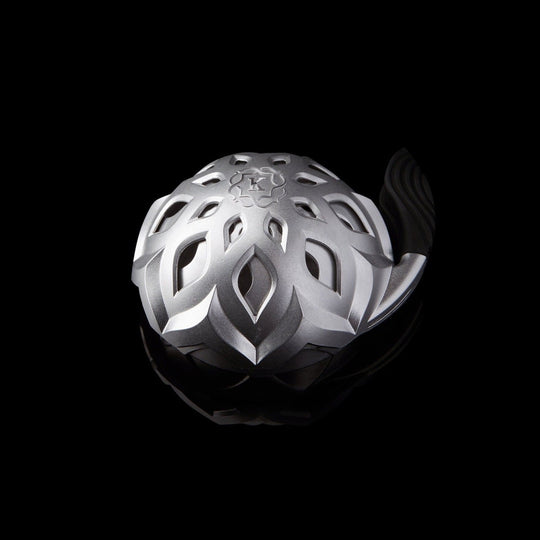
Kaloud works within the charcoal format. The Kaloud Lotus regulates charcoal heat while keeping the hands-on control that airflow gives. Kaloud Krysalis hookahs are built from non-porous materials that keep the air path consistent.
Common myths vs reality
| Myth | Reality |
|---|---|
| Electric always performs better | Performance depends on keeping the shisha in range, whatever the heat source |
| Charcoal is always inconsistent | With regulated heat and steady draws, charcoal holds steady too |
| More power means more flavor | Past the range, flavor breaks down and turns harsh |
Frequently asked questions
Which is better: electric or traditional hookah?
Neither by default. The better system is the one that keeps the shisha in range more of the time. Electric is steadier. Charcoal is more adjustable.
Do electric hookahs taste different?
Electric hookahs give even flavor through a session. Charcoal lets you shift heat and change how a blend comes through.
Why does a charcoal hookah sometimes taste harsh?
The top of the bowl is running too hot. Hard draws, fresh coals or coals sitting on the shisha push it past the target range.
Do electric hookahs use charcoal?
No. An electronic element replaces the coals entirely.
Can a heat management device make charcoal more consistent?
Yes. It holds the coals off the shisha and regulates how much heat reaches the bowl, which narrows temperature swings.
References
- "A Device-Independent Evaluation of Carbonyl Emissions from Heated Electronic Cigarette Solvents." PLOS One, 2017. journals.plos.org
- Kaloud in-house temperature testing, Lotus I+3, tall black bowl, 30 g, LOG200-TC logger with Type K thermocouples. Sessions of 13, 20 and 23 September 2026.
About the reviewer: Reza Bavar is the founder and lead designer of Kaloud. He designed the Kaloud Lotus heat management device and continues to design and develop Kaloud hardware, from heat management and bowls to complete hookah systems.